


Original title: ELVIS
Filming date:
June 20-30, 1968
Release date:
December 3, 1968
Running time:
90min
Production company:
NBC-TV
Budget:
US$ 1 million
Box office:
---
Main cast:
Elvis Presley
Soundtrack:
"If I Can Dream" (single)
[b/w "Edge of Reality"]
(November 5, 1968)
[b/w "Edge of Reality"]
(November 5, 1968)
"Elvis (NBC-TV Special)" (LP)
(November 22, 1968)
"Charro!" (single)
[b/w "Memories"]
(February 25, 1969)
"The Complete '68 Comeback Special " (CD)
(August 5, 2008)
(November 22, 1968)
"Charro!" (single)
[b/w "Memories"]
(February 25, 1969)
"The Complete '68 Comeback Special " (CD)
(August 5, 2008)
"Elvis (NBC-TV Special)" (CD)
(FTD, May 2016)
"'68 Comeback Special - 50th Anniversary" (CD)
(November 30, 2018)
(FTD, May 2016)
"'68 Comeback Special - 50th Anniversary" (CD)
(November 30, 2018)
ELVIS, also known as ELVIS - NBC-TV Special or '68 Comeback Special, was the singer's first television special and aired on North American television on December 3, 1968, officially marking Elvis Presley's return to the stage the following year, after 13 years of making questionable films in Hollywood.
IDEA AND CONCEPT
AIRING AND LEGACY
Two versions initially aired on NBC. The first included Elvis singing "Blue Christmas", the only seasonal song Binder agreed to use. When the special was rebroadcast the following summer, it was replaced by a performance OF "Tiger Man". Eventually, all the songs were released on official works and bootlegs over the years.
SOUNDTRACK
 The first song from the special to be released was "Tiger Man", in the budget LP "Elvis Sings Flaming Star", on October 18, 1968, making it the first work to feature a live performance by Elvis. "If I Can Dream" would be the next, on a single sold on November 5, 1968, with "Edge of Reality", from the film "Live a Little, Love a Little", as its B-side.
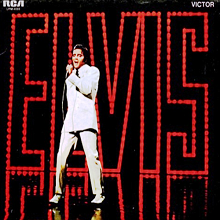
 The complete recordings only became public in 2008, when Sony Legacy released a box set with four CDs and a booklet covering the entire special, entitled "ELVIS - The Complete '68 Comeback Special". "ELVIS - Original Soundtrack From His NBC-TV Special", a double CD reissue by FTD, hit the market in 2016, but didn't offer much new. "'68 Comeback Special - 50th Anniversary"brought the almost complete recordings and two Blu-Rays in 2018.
Directed and produced by Steve Binder, the musical had a long runtime for programs of the time, running 90 minutes at a time when even the most successful series were only 45 minutes long, and attracted an audience of over 200 million people. Elvis' informal performance in front of a small audience is considered a precursor to the "unplugged" concept, later popularized by MTV.
IDEA AND CONCEPT
Despite great success in both his music and film careers from the late 1950s to the mid-1960s, Elvis saw this status steadily decline in the years leading up to 1968. The music scene had changed dramatically since his last #1 single in 1962, and Presley was threatened by bands like The Beatles and the British Invasion in general, which was dominating the end of the decade with its "yeah, yeah, yeah" sound.
Partly due to repetitive scripts and laughable songs, and partly due to the general feeling that he was no longer "cool", Presley's films had been making less money with each release, and the singer was tired of Hollywood. As a result, Colonel Parker found himself facing increasingly difficult obstacles to secure the usual $1,000,000 per film fee, and had no alternative but to take a different approach.
He then negotiated a deal with NBC and sewing machine manufacturer Singer to finance a television special, an LP (Elvis Sings Flaming Star, 1968/69) and a film (1969's "Change of Habit"), for which Elvis would receive an amount of US$ 1,250,000.
 |
| Elvis during press conference for the special. SOURCE: Getty Images/NBC. |
Parker wanted the show, which would air around Christmastime, to consist of nothing more than Presley singing Christmas songs; he believed the special could simply be a television version of the Christmas radio show Elvis had contributed to the previous year. To dissuade him from the idea, Binder argued that the special was an opportunity to reestablish the singer's reputation after years of mediocre films and recordings of varying quality, and that everything should be done to remove him from that image.
He then hired writers who specialized in shows with specific themes: grand sets, dance sequences, and full exposure of the lead performer. However, the idea was open to any variations that would help showcase the singer's talents, and Presley was apparently quite happy with this flexible approach.
 |
| Elvis and Steve Binder (to his left) during the "Trouble/Guitar Man" sequence shooting. SOURCE: Getty Images/NBC. |
The special ended up including an extravagant musical sequence with Gospel numbers, a semi-autobiographical "mini-movie" centered on the music "Guitar Man", and other re-recordings set in luxury settings. A segment in a brothel with the song "Let Yourself Go" was initially approved by network censors, but removed at the request of the show's main sponsor, the Singer Corporation, who considered it too risqué; the first public appearance of this sequence was in the expanded version of the documentary "This is Elvis", from 1981, but it was later returned to the final cut for DVD releases.
The end of the special featured Elvis calling for world peace and racial tolerance with the song "If I Can Dream", which became one of his biggest hits. One of the biggest hits of the time, "A Little Less Conversation", recorded on March 7, 1968 and heard in the film "Live a Little, Love a Little", was re-recorded for the show's closing credits, but ended up not being used and replaced by a instrumental re-recording of "Let Yourself Go".
FILMING AND CUTTING
Studio recordings of the music for these large-scale segments were made at Western Recorders Studio 1 in Hollywood, California, between June 20 and 23, 1968, with retouches on the 27th, 28th and 30th of that month, and featured an orchestra, the group The Blossoms as backing vocals and the experienced studio musicians, who had already worked with Elvis on albums such as "How Great Thou Art", in 1967, Hal Blaine, Don Randi, Tommy Tedesco, Larry Knechtel, Tommy Morgan and others - members of the famous The Wrecking Crew.
Elvis filmed his sequels during this same period at NBC Studios in Burbank, California. The relaxed atmosphere allowed him to feel a little more at ease than he had on the set of his films and brought out his more playful side. Between takes, the singer relaxed with his friends, new and old, chatted with the members of The Blossoms, and tried to avoid the stares and advances of the dancers in the sketches, all the while enjoying the attention and even responding to some subtle encouragement.
Two informal rehearsals were recorded, each about two hours long; the first on June 24th and the second on the 25th. Both took place in Elvis' dressing room and were captured on tape by Joe Esposito using the singer's own tape recorder. Many songs were rehearsed, including "Danny Boy", "Blue Moon" and "This is My Desire", in addition to "I Got a Woman", but the final repertoire was decided shortly before the official recording.
Still upset with all these important decisions being made without his oversight, Parker wanted to show Elvis that the show, if not executed as he had envisioned, would be a failure. The Colonel then offered to distribute the tickets for the performances to resellers, but his plan was more Machiavellian. On June 27, 1968, when the first tapings with an audience were to take place, not a single person showed up; Binder, incredulous that no one was interested in Elvis anymore, eventually learned from an NBC security guard what had become of the tickets: "An old man in a suit, smoking a cigar, and half-bald, left several packages of tickets in my booth a few days ago", the employee said.
The end of the special featured Elvis calling for world peace and racial tolerance with the song "If I Can Dream", which became one of his biggest hits. One of the biggest hits of the time, "A Little Less Conversation", recorded on March 7, 1968 and heard in the film "Live a Little, Love a Little", was re-recorded for the show's closing credits, but ended up not being used and replaced by a instrumental re-recording of "Let Yourself Go".
 |
| Letter sent to the Colonel by Steve Binder, requesting the Master of "A Little Less Conversation" and a version without Elvis' voice to be used on the program |
FILMING AND CUTTING
Studio recordings of the music for these large-scale segments were made at Western Recorders Studio 1 in Hollywood, California, between June 20 and 23, 1968, with retouches on the 27th, 28th and 30th of that month, and featured an orchestra, the group The Blossoms as backing vocals and the experienced studio musicians, who had already worked with Elvis on albums such as "How Great Thou Art", in 1967, Hal Blaine, Don Randi, Tommy Tedesco, Larry Knechtel, Tommy Morgan and others - members of the famous The Wrecking Crew.
Elvis filmed his sequels during this same period at NBC Studios in Burbank, California. The relaxed atmosphere allowed him to feel a little more at ease than he had on the set of his films and brought out his more playful side. Between takes, the singer relaxed with his friends, new and old, chatted with the members of The Blossoms, and tried to avoid the stares and advances of the dancers in the sketches, all the while enjoying the attention and even responding to some subtle encouragement.
 |
| Elvis on the stage of NBC Studio 4, the same one where The Beatles performed in 1963 |
It was shortly after the Western Recorders recordings that Binder had his most brilliant idea: to put Elvis and his friends on stage surrounded by a select audience, to whom he would tell stories from his career and sing his greatest hits. Presley was very apprehensive about performing live, as his last show had been at Bloch Arena in Pearl Harbor, Hawaii, on March 25, 1961.
Binder offered the singer great support and confidence to prevent him from rejecting any live segments. Realizing that some previously recorded songs would need to be cut to avoid exceeding the program's time limit, the director used the informal session to capture the sense of interference as Elvis played and chatted with the surviving members of his original band—Scotty Moore and D.J. Fontana (bassist Bill Black had passed away in 1965). He also brought Presley's personal friends Alan Fortas, Lance Legault, and Charlie Hodge to make him feel at ease.
 |
| Elvis and friendss. SOURCE: Getty Images/NBC. |
Two informal rehearsals were recorded, each about two hours long; the first on June 24th and the second on the 25th. Both took place in Elvis' dressing room and were captured on tape by Joe Esposito using the singer's own tape recorder. Many songs were rehearsed, including "Danny Boy", "Blue Moon" and "This is My Desire", in addition to "I Got a Woman", but the final repertoire was decided shortly before the official recording.
Still upset with all these important decisions being made without his oversight, Parker wanted to show Elvis that the show, if not executed as he had envisioned, would be a failure. The Colonel then offered to distribute the tickets for the performances to resellers, but his plan was more Machiavellian. On June 27, 1968, when the first tapings with an audience were to take place, not a single person showed up; Binder, incredulous that no one was interested in Elvis anymore, eventually learned from an NBC security guard what had become of the tickets: "An old man in a suit, smoking a cigar, and half-bald, left several packages of tickets in my booth a few days ago", the employee said.
There was no doubt that the Colonel had wanted to sabotage his protégé, undermine his confidence, and force him back into the shelter of his counsel. With no way out, Binder crossed the street from the studio and entered Bob's Big Boy Diner: "Who would like to see Elvis Presley perform for free?" he asked aloud. Within minutes, the studio was packed.
Later, at 6 p.m. on June 27, Elvis took the stage for the first time in over seven years, resulting in two half-hour sessions recorded at the NBC Burbank studios. Dressed in black leather, Presley sat and played with his bandmates in two of these shows, each with a different audience and an hour between them (enough time for Presley to shower and have his equipment dry-cleaned to remove traces of sweat).
Two other sessions, also half an hour long, recorded at 8 p.m. on June 29, featured the singer standing in front of an audience and adding his voice to a pre-recorded mix of several songs, as well as performing some of his hits live. These four sessions are often collectively referred to as "The Burbank Sessions", a name derived not only from the venue but also from the titles of two 1978 bootleg LPs.
 |
| Elvis performs live for the first time since 1961; Burbank, California - June 27, 1968. SOURCE: scottymoore.net |
However, only a few excerpts of these performances were included in the television special. Presley and his friends played and sang, interjecting personal stories about their songs and early performances; the group also discussed Elvis' religious upbringing and referenced major bands of the era, such as The Byrds and The Beatles, noting how things had improved not only in recording but also in the standards of musicians and sound engineering.
Amid hits like "That's All Right", "Heartbreak Hotel", "One Night" AND "Are You Lonesome Tonight?", Elvis also played current hits, showing himself to be extremely happy with his return to the stage. "Love Me Tender" was openly offered to his wife, Priscilla, who was in the audience at every performance.
AIRING AND LEGACY
The edited December 3, 1968, broadcast, combining the choreographed numbers and some of the informal live sessions, was a huge success and became the highest-rated television special of the year. According to Binder, it was probably the first one-man television special to appear on American television.
 |
| Promotional still used for print advertisements about the special |
The '68 Comeback Special has a storied legacy, widely credited with revitalizing Elvis' career. Following the special, the singer appeared in three more well-received films ("Charro!", "The Trouble With Girls" and "Change of Habit", all released in 1969) and began his Las Vegas run with a series of sell-out performances that broke records across the United States.
The show remains relevant today and is remembered by numerous artists. In 2002, "A Little Less Conversation" was remixed by Junkie XL, giving the King of Rock his second posthumous #1 hit. The opening sequence "Trouble/Guitar Man" was later copied or paid homage to by several artists, including Robbie Williams, Falco, and Texas.
In 2007 and 2008, two virtual duets were inspired by Presley's performances on the show; one on the reality show American Idol, where Céline Dion sang "If I Can Dream" alongside a hologram of the King of Rock, and another with Martina McBride being digitally inserted into the performance of "Blue Christmas" seen in the special.
SOUNDTRACK
The soundtrack LP itself was released on November 22, 1968, and contained most of the songs that would be heard on the following month's television broadcast. The album was a sales success, peaking at #8 on the Billboard Hot 200 and achieving Gold certification on July 22, 1969, and Platinum certification on July 15, 1999.
A new edition with additional tracks was released on CD in 1991. In 1998, the 30th anniversary of the special was celebrated with a double CD that included, in addition to the 1991 reissue, extras from the rehearsals of June 24 and 25, 1968, and highlights from the shows of June 27 and 29 of that year.


No comments:
Post a Comment
Thanks for your comment!
REMEMBER: We will not post messages with any kind of offense and/or profanity.