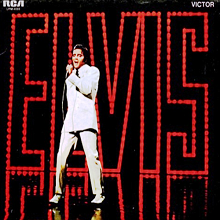
Official discography; Elvis All Star Tribute, 2019
Year:
2019
Recording date:
March 7, 1968 - January 2019
Release:
February 15, 2019
Singles:
---
The Best of the '68 Comeback Specialis Elvis' 464th audiophonic work (including LPs, CDs, singles and EPs). It contains 15 tracks recorded for the '68 Comeback Special, three seventies singles and a 2019 re-recording of "If I Can Dream". The CD served as a promo for the TV special "Elvis All Star Tribute", which aired on NBC-TV on February 17, 2019.
By mid-2018, Elvis fans around the world were already celebrating the fiftieth anniversary of the '68 Comeback Special and expected grand tributes to the feat, which is remembered to this day for its cultural significance, the changes it has wrought in entertainment since then, and, thanks to Elvis, the invention of acoustic performances.
There were numerous bootlegs of the performances from 1978 to 1999, when FTD took on the responsibility of officially bringing such content, previously released with poor audio or extracted from damaged sources, to the public. However, it would never bring all the available content, including rehearsals, into a single release. This, incredibly, was only done by RCA/Sony/BMG for the show's 50th anniversary, in a box set with 5 CDs and 2 DVDs sold on November 30, 2018.
The box set would certainly have been a sales success—and it was—among fans, but it still needed to bring Elvis to the public's attention. With this in mind, NBC-TV executives came up with the idea of recreating the 1968 show's setting and bringing together some of today's most famous artists to perform the songs that made Elvis the King of Rock.
Recorded in October 2018, the show featured excerpts from the original '68 Comeback Special, with Elvis singing his classics amid modernized vocal performances by the show's featured artists. Although not part of the 1968 broadcast, some later hits were also reinterpreted.
The CD with the show's soundtrack went into stores on February 15, 2019 under the title "The Best of the '68 Comeback Special". However, only one of the album's 19 tracks features the artists from the television show singing with Elvis. Of the other 18, fifteen are renditions made during the shows for the 1968 special, already well-known to the public, with only minor edits and remixes. The remaining three are take 2 of "A Little Less Conversation", from 1968's "Live a Little, Love a Little" soundtrack, and the "Suspicious Minds" and "Burning Love" Masters with minor remixes.
Studio:
Western Recorders Sudio 1
NBC-TV Studio 4
American Sound Studio
RCA Studio C
Universal Studios
Location:
Hollywood, California
Burbank, California
Memphis, Tennessee
March 7, 1968 Voice: Elvis Presley Electric guitar: Charles Britz, Neil Levang, Joseph Gibbons, Al Casey Bass: Charles Berghofer, Larry Knechtal Drums: Hal Blaine Piano: Don Randi Percussion: Gary Coleman Trombone: Lew McCreary, Thomas Shepard, Richard Leith, Dick Hyde Trumpet: Roy Caton, Oliver Mitchell Saxophone: James Horn Violin: Lou Raderman, Sidney Sharp, Leonard Malarsky, Ralph Schaeffer, William Kurasch, Tibor Zelig, Jerome Reisler, James Getzoff, Harry Bluestone, Arnold Belnick, Bernard Kundell, Stanley Plummer Viola: Harry Hyams, Joe DiFiore, Leonard Selic, Louis Kievman, David Burke, Gareth Nuttycombe Cello: Jesse Ehrlich, Armand Kaproff, Joseph DiTullio, Victor Sazer, Frederick Seykora, H.G. Bemko Backing Vocals: B.J. Baker, Sally Stevens, Bob Tebow, John Bahler Sound Engineer / Recording Engineer: Billy Strange, Charles Britz June 22–29, 1968 Voice: Elvis Presley Acoustic guitar: Elvis Presley, Scotty Moore, Charlie Hodge Electric guitar: Tommy Tedesco, Al Casey, Michael Deasy, Scotty Moore, Elvis Presley Bass: Larry Knechtal, Charles Berghofer Drums: Hal Blaine Percussion: John Cyr, Elliott Franks, D. J Fontana, Alan Fortas Piano: Don Randi Keyboards: Bob Alberti, Tommy Wolfe, Larry Knechtal Harmonica: Tommy Morgan Bongos: Frank DeVito Tambourine: Lance Legault Backing Vocals: The Blossoms, Julie Rinker, B.J. Baker, Frank Howren, Bill Lee, Gene Merlino, Thurl Ravenscroft, Bill Brown, Joe Eich, Elaine Black, Dean Parker, Jack Gruberman, Sally Stevens, Jackie Ward, Ronald Hicklin, Tom Bahler, Mitch Gordon Orchestra: NBC Orchestra Conductor: Billy Goldenberg Arrangers: Billy Goldenberg, Jack Elliott Violin: Leonard Atkins, Leonard Malarsky, Sidney Sharp, Thelma Beach, Marvin Limonick, Joseph Stepansky, Alexander Murray, Ambrose Russo Cello: Eleanor Saltkin, Paul Bergstrom, Christine Walevska, Emmett Sargeant, Richard Noel, Frank Rosolino, Ernest Tack Trombone: Francis Howard Trumpet: Oliver Mitchell, John Audino, Manny Stevens, Anthony Terran Saxophone: Anthony Ortega, Peter Christlies, John Kelso, Gene Cipriano Horns: Dick Perrisi, William Hinshaw Sound Engineer / Recording Engineer: Bones Howe, Steve Binder
January 23, 1969 Voice: Elvis Presley Acoustic guitar:Elvis Presley Electric guitar:Reggie Young Rhythm guitar: John Wilkinson Bass:Tommy Cogbill, Mike Leech Organ: Bobby Emmons Drums:Gene Chrisman Piano:Bobby Wood, Elvis Presley Conductor:Joe Guercio Backing Vocals:Elvis Presley (Suspicious Minds) Sound Engineer / Recording Engineer: Felton Jarvis, Chips Moman, Roy Shockley
March 28/29, 1972 Voice: Elvis Presley Acoustic guitar: Charlie Hodge, Joe Esposito Electric guitar: James Burton Rhytm guitar: John Wilkinson Bass: Emory Gordy, Jr Drums: Ronnie Tutt Piano: Glen Hardin Backing Vocals: JD Sumner, The Stamps Quartet Sound Engineer / Recording Engineer: Al Pachucki, Rick Ruggieri
MARCH 7, 1968
Wonderful World (Movie Version)
Wonderful World (Record Version) WPA1 5768-17
Wonderful World (Unused Movie Version)
Edge Of Reality WPA1 5769-08
A Little Less Conversation (Record / Album Version) WPA1 5767-10
A Little Less Conversation (Movie / Single Version) WPA15767-16
A Little Less Conversation (Dubdown)
Almost In Love
Almost In Love (Low Key - Track)
Almost In Love (High Key - Track)
JUNE 22, 1968
Up Above My Head / I Found That Light / Saved (Intro) ("Gospel" Section 2 - Cont.) WPA1 8040-13
Saved (Part 1) / Preach For The Sky / Saved (Part 2) ("Gospel" Section 3)WPA1 8041-SP
Gospel Medley (Composite)
Trouble ("Opening") WPA1 8030-21
Guitar Man ("Opening") WPA1 8047-SP
JUNE 23, 1968 (sections in red were used in the 2019 re-recording)
Electronic Karate (Instrumental)
Guitar Scratch, Bridge (Instrumental)
Guitar Scratch, Bridge (Instrumental - Dubdown)
The Scratch (Instrumental)
Road Medley (Composite) If I Can Dream (Record Version) WPA1 8029-05 If I Can Dream (Dubdown) WPA1 8111-02
Memories (Track)
Memories (Short Track)
Let Yourself Go (Closing Instrumental)
Let Yourself Go (Closing Instrumental - Dubdown) FRA1 8104-04
JUNE 24, 1968
Memories (Vocal Overdub) WPA1 8044-NA2
JUNE 27, 1968 (6 PM)
Introduction
That's All Right CPA5 5180
Heartbreak Hotel CPA5 5173
Love Me CPA5 5174
Baby, What You Want Me To Do (#1) CPA5 5175
Blue Suede Shoes LPA5 5817
Baby, What You Want Me To Do (#2) (KPA5 9564) (OPA1 4835) WPA1 8032
Lawdy, Miss Clawdy CPA5 5176 Are You Lonesome Tonight? CPA5 5177
When My Blue Moon Turns To Gold Again CPA5 5138
Blue Christmas CPA5 5178
Tryin' To Get To You CPA5 5139
One Night (#1) CPA5 5179
Baby, What You Want Me To Do (#3) (OPA1 4838) WPA1 8120
One Night (#2) (OPA1 4841) WPA1 8043
Memories (Vocal Overdub of June 23 track) CPA5 5188
JUNE 27, 1968 (8 PM)
Heartbreak Hotel CPA5 5140
Baby, What You Want Me To Do (#1) CPA5 5141
Introductions CPA5 5142
That's All Right (OPA1 4832) WPA1 8115
Are You Lonesome Tonight? (OPA1 4837) WPA1 8116
Baby, What You Want Me To Do CPA5 5143 Blue Suede Shoes (OPA1 4833) WPA1 8117 One Night (CPA5 5144) WPA1 8043 Love Me (OPA1 4836) WPA1 8118 Tryin' To Get To You (OPA1 4842) WPA1 8119
Lawdy, Miss Clawdy (KPA5 9564) (OPA1 4834) WPA1 8031
Santa Claus Is Back In Town CPA5 5145
Blue Christmas (OPA1 4840) (CPA5 5178) WPA1 8042
Tiger Man (OPA1 4839) WPA1 8028
When My Blue Moon Turns To Gold Again CPA5 5146
Memories (Vocal Overdub of June 23 Track) CPA5 5147
JUNE 29, 1968 (6 PM)
Introduction
Heartbreak Hotel / Hound Dog (incomplete)
One Night (incomplete) Heartbreak Hotel WPA1 8033
Hound Dog WPA1 8034
All Shook Up WPA1 8035
Can't Help Falling In Love WPA1 8036
Jailhouse Rock CPA5 5191 Don't Be Cruel CPA5 5192
Blue Suede Shoes LPA5 5817 Love Me Tender CPA5 5193
Trouble / Guitar Man (Vocal overdub of "After Karate" section 3 track) (abandoned) CPA5 5150 Baby, What You Want Me To Do CPA5 5194
If I Can Dream (Playback & lip-synch of June 23 Master) WPA1 8029
JUNE 29, 1968 (8 PM)
Introduction
Heartbreak Hotel (false start) FRA1 8100 Heartbreak Hotel FRA1 8100 Hound Dog FRA1 8101 All Shook Up FRA1 8102 Can't Help Falling In Love FRA1 8103 Jailhouse Rock WPA1 8037
Don't Be Cruel WPA1 8114
Blue Suede Shoes (false start)
Blue Suede Shoes CPA5 5149
Love Me Tender WPA1 8038
Trouble / Guitar Man (false start) (Take 1)
Trouble / Guitar Man (false start) (Take 2)
Trouble / Guitar Man (false start) (Take 3)
Trouble / Guitar Man (Used for Soundtrack Medley) (Take 4) WPA1 8049
Trouble / Guitar Man (complete) (Take 5)
If I Can Dream (Playback & lip-synch of June 23 Master) WPA1 8029
JANUARY 23, 1969
Without Love (There is Nothing) XPA5 1159
I'll Hold You in My Heart (Till I Can Hold You in My Arms) XPA5 1160
I'll Be There XPA5 1161
Suspicious Minds XPA5 1227
March 28/29, 1972
Burning Love BPA3 1257-06
Fool BPA3 1258-02 -------------------------------------------------------------------
THE BEST OF THE '68 COMEBACK SPECIAL (CD, SONY LEGACY)
February 15, 2019
1. Trouble / Guitar Man (Spliced Master, 22/06/68)
2. Heartbreak Hotel (29/06/68, 20h)
3. Hound Dog (29/06/68, 20h)
4. All Shook Up (29/06/68, 20h)
5. Can't Help Falling In Love (29/06/68, 20h)
6. Jailhouse Rock (29/06/68, 20h)
7. Don't Be Cruel (29/06/68, 18h)
8. Blue Suede Shoes 27/06/68, 20h)
9. Baby, What You Want Me To Do (29/06/68, 18h)
10. Are You Lonesome Tonight? (27/06/68, 18h)
11. One Night (27/06/68, 20h)
12. Love Me Tender (29/06/68, 18h)
13. Tryin' To Get To You (27/06/68, 20h)
14. Love Me (27/6/68 8pm) (29/06/68, 20h)
15. Memories (With Applause, 24/06/68) + 4 faixas
"Elvis (NBC-TV Special)" (CD) (FTD, May 2016) "'68 Comeback Special - 50th Anniversary" (CD) (November 30, 2018)
ELVIS, also known as ELVIS - NBC-TV Specialor'68 Comeback Special, was the singer's first television special and aired on North American television on December 3, 1968, officially marking Elvis Presley's return to the stage the following year, after 13 years of making questionable films in Hollywood.
Directed and produced by Steve Binder, the musical had a long runtime for programs of the time, running 90 minutes at a time when even the most successful series were only 45 minutes long, and attracted an audience of over 200 million people. Elvis' informal performance in front of a small audience is considered a precursor to the "unplugged" concept, later popularized by MTV.
IDEA AND CONCEPT
Despite great success in both his music and film careers from the late 1950s to the mid-1960s, Elvis saw this status steadily decline in the years leading up to 1968. The music scene had changed dramatically since his last #1 single in 1962, and Presley was threatened by bands like The Beatles and the British Invasion in general, which was dominating the end of the decade with its "yeah, yeah, yeah" sound.
Partly due to repetitive scripts and laughable songs, and partly due to the general feeling that he was no longer "cool", Presley's films had been making less money with each release, and the singer was tired of Hollywood. As a result, Colonel Parker found himself facing increasingly difficult obstacles to secure the usual $1,000,000 per film fee, and had no alternative but to take a different approach.
He then negotiated a deal with NBC and sewing machine manufacturer Singerto finance a television special, an LP(Elvis Sings Flaming Star, 1968/69) and a film (1969's "Change of Habit"), for which Elvis would receive an amount of US$ 1,250,000.
Elvis during press conference for the special. SOURCE: Getty Images/NBC.
Parker wanted the show, which would air around Christmastime, to consist of nothing more than Presley singing Christmas songs; he believed the special could simply be a television version of the Christmas radio show Elvis had contributed to the previous year. To dissuade him from the idea, Binder argued that the special was an opportunity to reestablish the singer's reputation after years of mediocre films and recordings of varying quality, and that everything should be done to remove him from that image.
He then hired writers who specialized in shows with specific themes: grand sets, dance sequences, and full exposure of the lead performer. However, the idea was open to any variations that would help showcase the singer's talents, and Presley was apparently quite happy with this flexible approach.
Elvis and Steve Binder (to his left) during the "Trouble/Guitar Man" sequence shooting. SOURCE: Getty Images/NBC.
The special ended up including an extravagant musical sequence with Gospel numbers, a semi-autobiographical "mini-movie" centered on the music "Guitar Man", and other re-recordings set in luxury settings. A segment in a brothel with the song "Let Yourself Go" was initially approved by network censors, but removed at the request of the show's main sponsor, the Singer Corporation, who considered it too risqué; the first public appearance of this sequence was in the expanded version of the documentary "This is Elvis", from 1981, but it was later returned to the final cut for DVD releases.
The end of the special featured Elvis calling for world peace and racial tolerance with the song "If I Can Dream", which became one of his biggest hits. One of the biggest hits of the time, "A Little Less Conversation", recorded on March 7, 1968 and heard in the film "Live a Little, Love a Little", was re-recorded for the show's closing credits, but ended up not being used and replaced by a instrumental re-recording of "Let Yourself Go".
Letter sent to the Colonel by Steve Binder, requesting the Master of "A Little Less Conversation" and a version without Elvis' voice to be used on the program
FILMING AND CUTTING
Studio recordings of the music for these large-scale segments were made at Western Recorders Studio 1 in Hollywood, California, between June 20 and 23, 1968, with retouches on the 27th, 28th and 30th of that month, and featured an orchestra, the group The Blossoms as backing vocals and the experienced studio musicians, who had already worked with Elvis on albums such as "How Great Thou Art", in 1967, Hal Blaine, Don Randi, Tommy Tedesco, Larry Knechtel, Tommy Morgan and others - members of the famous The Wrecking Crew.
Elvis filmed his sequels during this same period at NBC Studios in Burbank, California. The relaxed atmosphere allowed him to feel a little more at ease than he had on the set of his films and brought out his more playful side. Between takes, the singer relaxed with his friends, new and old, chatted with the members of The Blossoms, and tried to avoid the stares and advances of the dancers in the sketches, all the while enjoying the attention and even responding to some subtle encouragement.
Elvis on the stage of NBC Studio 4, the same one where The Beatles performed in 1963
It was shortly after the Western Recorders recordings that Binder had his most brilliant idea: to put Elvis and his friends on stage surrounded by a select audience, to whom he would tell stories from his career and sing his greatest hits. Presley was very apprehensive about performing live, as his last show had been at Bloch Arena in Pearl Harbor, Hawaii, on March 25, 1961.
Binder offered the singer great support and confidence to prevent him from rejecting any live segments. Realizing that some previously recorded songs would need to be cut to avoid exceeding the program's time limit, the director used the informal session to capture the sense of interference as Elvis played and chatted with the surviving members of his original band—Scotty Moore and D.J. Fontana (bassist Bill Black had passed away in 1965). He also brought Presley's personal friends Alan Fortas, Lance Legault, andCharlie Hodge to make him feel at ease.
Elvis and friendss. SOURCE: Getty Images/NBC.
Two informal rehearsals were recorded, each about two hours long; the first on June 24th and the second on the 25th. Both took place in Elvis' dressing room and were captured on tape by Joe Esposito using the singer's own tape recorder. Many songs were rehearsed, including "Danny Boy", "Blue Moon" and "This is My Desire", in addition to "I Got a Woman", but the final repertoire was decided shortly before the official recording.
Still upset with all these important decisions being made without his oversight,Parker wanted to show Elvis that the show, if not executed as he had envisioned, would be a failure. The Colonel then offered to distribute the tickets for the performances to resellers, but his plan was more Machiavellian. On June 27, 1968, when the first tapings with an audience were to take place, not a single person showed up; Binder, incredulous that no one was interested in Elvis anymore, eventually learned from an NBC security guard what had become of the tickets: "An old man in a suit, smoking a cigar, and half-bald, left several packages of tickets in my booth a few days ago", the employee said.
There was no doubt that the Colonel had wanted to sabotage his protégé, undermine his confidence, and force him back into the shelter of his counsel. With no way out, Binder crossed the street from the studio and entered Bob's Big Boy Diner: "Who would like to see Elvis Presley perform for free?" he asked aloud. Within minutes, the studio was packed.
Later, at 6 p.m. on June 27, Elvis took the stage for the first time in over seven years, resulting in two half-hour sessions recorded at the NBC Burbank studios. Dressed in black leather, Presley sat and played with his bandmates in two of these shows, each with a different audience and an hour between them (enough time for Presley to shower and have his equipment dry-cleaned to remove traces of sweat).
Two other sessions, also half an hour long, recorded at 8 p.m. on June 29, featured the singer standing in front of an audience and adding his voice to a pre-recorded mix of several songs, as well as performing some of his hits live. These four sessions are often collectively referred to as "The Burbank Sessions", a name derived not only from the venue but also from the titles of two 1978 bootleg LPs.
Elvis performs live for the first time since 1961; Burbank, California - June 27, 1968. SOURCE: scottymoore.net
However, only a few excerpts of these performances were included in the television special. Presley and his friends played and sang, interjecting personal stories about their songs and early performances; the group also discussed Elvis' religious upbringing and referenced major bands of the era, such as The Byrds and The Beatles, noting how things had improved not only in recording but also in the standards of musicians and sound engineering.
Amid hits like "That's All Right", "Heartbreak Hotel", "One Night" AND "Are You Lonesome Tonight?", Elvis also played current hits, showing himself to be extremely happy with his return to the stage. "Love Me Tender" was openly offered to his wife, Priscilla, who was in the audience at every performance.
AIRING AND LEGACY
The edited December 3, 1968, broadcast, combining the choreographed numbers and some of the informal live sessions, was a huge success and became the highest-rated television special of the year. According to Binder, it was probably the first one-man television special to appear on American television.
Two versions initially aired on NBC. The first included Elvis singing "Blue Christmas", the only seasonal song Binder agreed to use. When the special was rebroadcast the following summer, it was replaced by a performance OF "Tiger Man". Eventually, all the songs were released on official works and bootlegs over the years.
Promotional still used for print advertisements about the special
The '68 Comeback Special has a storied legacy, widely credited with revitalizing Elvis' career. Following the special, the singer appeared in three more well-received films ("Charro!", "The Trouble With Girls" and "Change of Habit", all released in 1969) and began his Las Vegas run with a series of sell-out performances that broke records across the United States.
The show remains relevant today and is remembered by numerous artists. In 2002, "A Little Less Conversation" was remixed by Junkie XL, giving the King of Rock his second posthumous #1 hit. The opening sequence "Trouble/Guitar Man" was later copied or paid homage to by several artists, including Robbie Williams, Falco, and Texas.
In 2007 and 2008, two virtual duets were inspired by Presley's performances on the show; one on the reality show American Idol, where Céline Dion sang "If I Can Dream" alongside a hologram of the King of Rock, and another with Martina McBride being digitally inserted into the performance of "Blue Christmas" seen in the special.
SOUNDTRACK
The first song from the special to be released was "Tiger Man", in the budget LP "Elvis Sings Flaming Star", on October 18, 1968, making it the first work to feature a live performance by Elvis. "If I Can Dream" would be the next, on a single sold on November 5, 1968, with "Edge of Reality", from the film "Live a Little, Love a Little", as its B-side.
The soundtrack LP itself was released on November 22, 1968, and contained most of the songs that would be heard on the following month's television broadcast. The album was a sales success, peaking at #8 on the Billboard Hot 200 and achieving Gold certification on July 22, 1969, and Platinum certification on July 15, 1999.
A new edition with additional tracks was released on CD in 1991. In 1998, the 30th anniversary of the special was celebrated with a double CD that included, in addition to the 1991 reissue, extras from the rehearsals of June 24 and 25, 1968, and highlights from the shows of June 27 and 29 of that year.
The complete recordings only became public in 2008, when Sony Legacy released a box set with four CDs and a booklet covering the entire special, entitled "ELVIS - The Complete '68 Comeback Special". "ELVIS - Original Soundtrack From His NBC-TV Special", a double CD reissue by FTD, hit the market in 2016, but didn't offer much new. "'68 Comeback Special - 50th Anniversary"brought the almost complete recordings and two Blu-Rays in 2018.
ELVIS (NBC-TV Special)is Elvis' 29th soundtrack album, his 59th LP and 154th work (including EPs and singles). It contains some of the songs that would be seen and heard on the NBC-TV special "ELVIS", which would air on December 3, 1968, and would redefine his career by demonstrating that the King of Rock was ready and willing to return to the stage after 12 years in film. Unlike the arduous work of film soundtrack recordings, this one showcased a genuinely enthusiastic Elvis about the project.
The album consisted of a mix of studio and live recordings, with the live material being a mix of sit-down tracks, featuring a small group of his friends and musicians, and stand-up with an orchestra. For the LP, the musical format featured Presley in three different configurations: medleys from his repertoire; a small informal band performing complete songs in front of an audience; and two original numbers backed by an orchestra in front of an audience.
The two ballads on this album were released as singles. "If I Can Dream" had been released on November 5, 1968, with "Edge of Reality", from the film "Live a Little, Love a Little", on the B-side and reached 12th place on the Billboard Hot 100, becoming his most successful single since 1965. "Memories" would be released two months after the broadcast, on February 25, 1969, as the B-side of the single"Charro!", title song of his next film. By reaching the Top 10 after his previous album peaked at a paltry #82, Elvis (NBC-TV Special) resurrected his recording career at a time when it seemed practically moribund.
In a first sort of dominant position regarding the direction to be taken, Elvis insisted that the mono mixes for these songs be kept on the album that would be sold in the US instead of being converted to stereo; such conversion, in addition to a reprocessed stereo version ("fake stereo"), would only be released on the international market, and the true stereo album would only arrive in the US on CD, in 1991.
Location:
Hollywood, Califórnia
Burbank, California
Musicians: Voice: Elvis Presley Acoustic guitar: Elvis Presley, Scotty Moore, Charlie Hodge Electric guitar: Tommy Tedesco, Al Casey, Michael Deasy, Scotty Moore, Elvis Presley Bass: Larry Knechtal, Charles Berghofer Drums: Hal Blaine Percussion: John Cyr, Elliott Franks, D. J Fontana, Alan Fortas Piano: Don Randi Keyboards: Bob Alberti, Tommy Wolfe, Larry Knechtal Harmonica: Tommy Morgan Bongos: Frank DeVito Tambourine: Lance Legault Backing Vocals: The Blossoms, Julie Rinker, B.J. Baker, Frank Howren, Bill Lee, Gene Merlino, Thurl Ravenscroft, Bill Brown, Joe Eich, Elaine Black, Dean Parker, Jack Gruberman, Sally Stevens, Jackie Ward, Ronald Hicklin, Tom Bahler, Mitch Gordon
Orchestra: NBC Orchestra Conductor: Billy Goldenberg Arrangers: Billy Goldenberg, Jack Elliott Violin: Leonard Atkins, Leonard Malarsky, Sidney Sharp, Thelma Beach, Marvin Limonick, Joseph Stepansky, Alexander Murray, Ambrose Russo Cello: Eleanor Saltkin, Paul Bergstrom, Christine Walevska, Emmett Sargeant, Richard Noel, Frank Rosolino, Ernest Tack Trombone: Francis Howard Trumpet: Oliver Mitchell, John Audino, Manny Stevens, Anthony Terran Saxophone: Anthony Ortega, Peter Christlies, John Kelso, Gene Cipriano Horns: Dick Perrisi, William Hinshaw
Sound engineer / Recording engineer:
Bones Howe, Steve Binder
JUNE 20, 1968
Nothingville / Guitar Man (Part 1) ("Guitar Man's Evil" Section 1) WPA1 8045-10
Let Yourself Go (Part 1) ("Guitar Man's Evil" Section 2)
Let Yourself Go (Part 1) (1st Verse Female Vocal Overdub)
Flicker Routine / Let Yourself Go (Part 2) / Alley Pickup ("Guitar Man's Evil" Section 3)
Let Yourself Go (Composite)WPA1 8112-SP
Guitar Man (Part 2 - Fast) ("Escape" Section 1)
Calliope Carnival ("Escape" Section 2)
Big Boss Man ("Escape" Section 3) WPA1 8046-03
It Hurts Me (Part 1) ("Escape" Section 4)
JUNE 21, 1968
Guitar Man (Part 2 - Slow) ("Escape" Section 1 Remake)
It Hurts Me (Part 2) ("After Karate" Section 1)
It Hurts Me (Composite) WPA1 8113-SP
Guitar Man (Part 3) / Little Egypt ("After Karate" Section 2) WPA1 8047 / 8048-10
Trouble / Guitar Man (Part 4) ("After Karate" Section 3) WPA18030 / 8047-03
Sometimes I Feel Like A Motherless Child / Where Could I Go But To The Lord/ Up Above My Head - Intro
Up Above My Head / I Found That Light / Saved - Intro ("Gospel" Section 2) (Continued on June 22)
JUNE 22, 1968
Up Above My Head / I Found That Light / Saved (Intro) ("Gospel" Section 2 - Cont.) WPA1 8040-13
Saved (Part 1) / Preach For The Sky / Saved (Part 2) ("Gospel" Section 3)WPA1 8041-SP
Gospel Medley (Composite)
Trouble ("Opening") WPA1 8030-21
Guitar Man ("Opening") WPA1 8047-SP
JUNE 23, 1968
Electronic Karate (Instrumental)
Guitar Scratch, Bridge (Instrumental)
Guitar Scratch, Bridge (Instrumental - Dubdown)
The Scratch (Instrumental)
Road Medley (Composite)
If I Can Dream (Record Version) WPA1 8029-05
If I Can Dream (Dubdown) WPA1 8111-02
Memories (Track)
Memories (Short Track)
Let Yourself Go (Closing Instrumental)
Let Yourself Go (Closing Instrumental - Dubdown) FRA1 8104-04
JUNE 27, 1968 (6PM)
Introduction
That's All Right CPA5 5180
Heartbreak Hotel CPA5 5173
Love Me CPA5 5174
Baby, What You Want Me To Do (#1) CPA5 5175
Blue Suede Shoes LPA5 5817
Baby, What You Want Me To Do (#2) (KPA5 9564) (OPA1 4835) WPA1 8032
Lawdy, Miss Clawdy CPA5 5176
Are You Lonesome Tonight? CPA5 5177
When My Blue Moon Turns To Gold Again CPA5 5138
Blue Christmas CPA5 5178
Tryin' To Get To You CPA5 5139
One Night (#1) CPA5 5179
Baby, What You Want Me To Do (#3) (OPA1 4838) WPA1 8120
One Night (#2) (OPA1 4841) WPA1 8043
Memories (Vocal Overdub of June 23 track) CPA5 5188
JUNE 27, 1968 (8PM)
Heartbreak Hotel CPA5 5140
Baby, What You Want Me To Do (#1) CPA5 5141
Introductions CPA5 5142
That's All Right (OPA1 4832) WPA1 8115
Are You Lonesome Tonight? (OPA1 4837) WPA1 8116
Baby, What You Want Me To Do CPA5 5143
Blue Suede Shoes (OPA1 4833) WPA1 8117
One Night (CPA5 5144) WPA1 8043
Love Me (OPA1 4836) WPA1 8118
Tryin' To Get To You (OPA1 4842) WPA1 8119
Lawdy, Miss Clawdy (KPA5 9564) (OPA1 4834) WPA1 8031
Santa Claus Is Back In Town CPA5 5145
Blue Christmas (OPA1 4840) (CPA5 5178) WPA1 8042
Tiger Man (OPA1 4839) WPA1 8028
When My Blue Moon Turns To Gold Again CPA5 5146
Memories (Vocal Overdub of June 23 Track) CPA5 5147
JUNE 28, 1968
Calliope Carnival / Big Boss Man ("Amusement Pier" part 1 - playback)
It Hurts Me ("Amusement Pier" part 2 - vocal overdub)
It Hurts Me ("Amusement Pier" part 2 pickups - playback)
? ("Amusement Pier" part 3 - playback)
It Hurts Me ("Amusement Pier" part 4 - playback)
Sometimes I Feel Like A Motherless Child / Where Could I Go But To The Lord / Up Above My Head - intro ("Gospel" part 1 - playback)
Up Above My Head / I Found That Light / Saved (intro) ("Gospel" part 2 - playback)
I Found That Light / Saved (part 1) ("Gospel" part 2 pickups - playback)
Preach For The Sky / Saved (part 2) ("Gospel" part 3 pickups - playback)
Let Yourself Go ("Guitar Man Let Yourself Go" part 1 - playback)
Let Yourself Go ("Guitar Man Let Yourself Go" part 3 - playback)
Let Yourself Go ("Guitar Man Let Yourself Go" inserts "grapes" - playback)
Let Yourself Go (Guitar Man Let Yourself Go" inserts "palms Together" - playback)
Let Yourself Go ("Guitar Man Let Yourself Go" inserts "leaning" - playback)
Let Yourself Go ("Guitar Man Let Yourself Go" inserts "kissing" - playback)
Let Yourself Go ("Guitar Man Let Yourself Go" part 2 "chairs" - playback)
Let Yourself Go ("Guitar Man Let Yourself Go" part 2 "dancing" - playback)
Let Yourself Go ("Guitar Man Let Yourself Go" part 2 "lounging" - playback)
JUNE 29, 1968 (6PM)
Introduction
Heartbreak Hotel / Hound Dog (incomplete)
One Night (incomplete)
Heartbreak Hotel WPA1 8033
Hound Dog WPA1 8034
All Shook Up WPA1 8035
Can't Help Falling In Love WPA1 8036
Jailhouse Rock CPA5 5191
Don't Be Cruel CPA5 5192
Blue Suede Shoes LPA5 5817
Love Me Tender CPA5 5193
Trouble / Guitar Man (Vocal overdub of "After Karate" section 3 track) (abandoned) CPA5 5150
Baby, What You Want Me To Do CPA5 5194
If I Can Dream (Playback & lip-synch of June 23 Master) WPA1 8029
JUNE 29, 1968 (8PM)
Introduction
Heartbreak Hotel (false start) FRA1 8100
Heartbreak Hotel FRA1 8100
Hound Dog FRA1 8101
All Shook Up FRA1 8102
Can't Help Falling In Love FRA1 8103
Jailhouse Rock WPA1 8037
Don't Be Cruel WPA1 8114
Blue Suede Shoes (false start)
Blue Suede Shoes CPA5 5149
Love Me Tender WPA1 8038
Trouble / Guitar Man (false start) (Take 1)
Trouble / Guitar Man (false start) (Take 2)
Trouble / Guitar Man (false start) (Take 3)
Trouble / Guitar Man (Used for Soundtrack Medley) (Take 4) WPA1 8049
Trouble / Guitar Man (complete) (Take 5)
If I Can Dream (Playback & lip-synch of June 23 Master) WPA1 8029
JUNE 30, 1968
Nothingville ("Road #1" - playback)
Guitar Man ("Road #2" - vocal overdub)
Guitar Man ("Road #3" - vocal overdub)
Guitar Man ("Opening" section #3 - playback)
Let Yourself Go (closing instrumental) (closing credits - playback)
Tag ("Huh, Huh, Huh")
If I Can Dream (TV soundtrack version - vocal overdub)WPA18050-04
Trouble (vocal overdub) / Guitar Man (playback) ("Opening" section #1)
Trouble / Guitar Man ("Opening" section guitar inserts - playback)
Trouble / Guitar Man ("Opening" section stills - playback)
Guitar Man ("Alley" - vocal overdub)
Little Egypt / Trouble ("Nightclub" - vocal overdub)
Trouble ("Discotheque" - vocal overdub)
Trouble ("Supper Club" - vocal overdub)
Opening Medley (TV soundtrack version - composite)
Gospel Medley (TV soundtrack version - composite)
Road Medley (TV soundtrack version - composite)
RELATED SINGLES, LPS AND CDS TRACKS (RCA, 1968-1991)
IF I CAN DREAM (SINGLE)
November 5, 1968
1. If I Can Dream
2. Edge of Reality
ELVIS (LP)
November 22, 1968
1. Trouble / Guitar Man
2. Lawdy, Miss Clawdy / Baby, What You Want Me to Do / Heartbreak Hotel / Hound Dog / All Shook Up / Can't Help Falling In Love / Jailhouse Rock / Love Me Tender
3. Where Could I Go But to the Lord / Up Above My Head / Saved
4. Blue Christmas / One Night
5. Memories
6. Nothingville / Big Boss Man / Guitar Man / Little Egypt / Trouble / Guitar Man
7. If I Can Dream
CHARRO! (SINGLE)
February 25, 1969
1. Charro!
2. Memories
ELVIS (LP - STEREO/FAKE STEREO)
1969
1. Trouble / Guitar Man
2. Lawdy, Miss Clawdy / Baby, What You Want Me to Do / Heartbreak Hotel / Hound Dog / All Shook Up / Can't Help Falling In Love / Jailhouse Rock / Love Me Tender
3. Where Could I Go But to the Lord / Up Above My Head / Saved
4. Blue Christmas / One Night
5. Memories
6. Nothingville / Big Boss Man / Guitar Man / Little Egypt / Trouble / Guitar Man
7. If I Can Dream
ELVIS (NBC-TV SPECIAL)
August 16, 1991
1. Trouble / Guitar Man
2. Lawdy, Miss Clawdy / Baby, What You Want Me to Do
3. Heartbreak Hotel / Hound Dog / All Shook Up / Can't Help Falling In Love / Jailhouse Rock / Love Me Tender
4. Where Could I Go But to the Lord / Up Above My Head / Saved
5. Baby, What You Want Me to Do / That's All Right (Mama) / Blue Christmas / One Night / Tiger Man / Trying to Get to You
6. Memories
7. Nothingville / Big Boss Man / Guitar Man / Little Egypt / Trouble / Guitar Man
In celebration of the 30th anniversary of the NBC-TV special,BMG released a new version of the show's soundtrack album. Featuring remastered audio, the double CD features previously unreleased tracks.
The album contains the following tracks:
CD 1
ORIGINAL LP EXTENDED
1. Trouble/Guitar Man
2. Heartbreak Hotel"
3. Hound Dog
4. All Shook Up
5. Can't Help Falling In Love
6. Jailhouse Rock
7. Don't Be Cruel
8. Blue Suede Shoes
9. Love Me Tender
10. Baby What You Want Me to Do
11. Trouble/Guitar Man
12. Sometimes I Feel Like a Motherless Child/Where Could I Go But to the Lord/Up Above My Head/Saved
13. Memories
14. A Little Less Conversation
15. Nothingville/Big Boss Man/Let Yourself Go/It Hurts Me/Guitar Man/Little Egypt/Trouble
In celebration of the special's 40th anniversary,Sony/BMG brought together for the first time not only the complete soundtrack of the program but also all the rehearsals and performances made for it, with a large majority of tracks previously unreleased in official releases.
The box set contains the following tracks:
CD 1
ORIGINAL LP EXTENDED
1. Trouble/Guitar Man
2. Lawdy, Miss Clawdy/Baby What You Want Me to Do/Heartbreak Hotel/Hound Dog/All Shook Up/Can't Help Falling In Love/Jailhouse Rock/Don't Be Cruel/Blue Suede Shoes/Love Me Tender
3. Where Could I Go But to the Lord/Up Above My Head/Saved
4. Blue Christmas/One Night
5. Memories
6. Medley: Nothingville/Big Boss Man/Guitar Man/Little Egypt/Trouble/Guitar Man
In celebration of the special's 50th anniversary,Sony Legacy brought together for the first time everything previously released and everything still unreleased, making this the most complete official release. The 5-CD set is accompanied by 2 Blu-Rays with all the filmings made for the special, plus the original TV broadcast, and an 84-page booklet.
The box set contains the following tracks:
CD 1
ORIGINAL LP EXTENDED
1. Trouble/Guitar Man
2. Lawdy, Miss Clawdy/Baby What You Want Me to Do/Heartbreak Hotel/Hound Dog/All Shook Up/Can't Help Falling In Love/Jailhouse Rock/Don't Be Cruel/Blue Suede Shoes/Love Me Tender
3. Where Could I Go But to the Lord/Up Above My Head/Saved
4. Blue Christmas/One Night
5. Memories
6. Medley: Nothingville/Big Boss Man/Guitar Man/Little Egypt/Trouble/Guitar Man
Burbank '68was the first CD released by the Follow That Dream (FTD) label, back in 1999, and is currently out of print. It features the complete rehearsals from June 25, 1968, recordings, and shows for the '68 Comeback Special, with 17 previously unreleased tracks.
The CD features the following tracks:
JUNE 25, 1968 REHEARSAL
1. Danny Boy (instrumental)
2. Baby, What You Want Me to Do (instrumental)
3. Love Me
4. Tiger Man
5. Dialogue / That's All Right / Peter Gunn (instrumental) / Santa Claus Is Back In Town
6. Lawdy, Miss Clawdy
7. One Night
8. Blue Christmas
9. Baby, What You Want Me to Do
10. When My Blue Moon Turns to Gold Again
11. Blue Moon of Kentucky
12. Dialogue
EXCERPTS FROM SHOWS
13. Heartbreak Hotel (06/29/68, 8pm)
14. Hound Dog (06/29/68, 8pm)
15. All Shook Up (06/29/68, 8pm)
16. Can't Help Falling In Love (06/29/68, 8pm)
17. Jailhouse Rock (06/29/68, 8pm)
18. Don't Be Cruel (06/29/68, 8pm)
19. Love Me Tender (06/29/68, 8pm)
20. Don't Be Cruel (06/29/68, 8pm)
ALTERNATE TAKES
21. Trouble / Guitar Man (Take 4) (06/22/68 track + 06/29/68, 8pm V. O.)
22. If I Can Dream (Soundtrack Version, Take 3) (06/23/68 track + 06/30/68 V. O)
Let Yourselg Go (The Making of "ELVIS" - The '68 Comeback Special was FTD's second CD to cover the special and its 57th release. This time, the label features previously unreleased takes of the sketches seen on the show and the complete rehearsal from June 24, 1968.
The CD features the following tracks:
OUTTAKES
1. Trouble/Guitar Man (Opening, Takes 6, 7 - 06/22/68)
2. Nothingville (Takes 5, 6 - 06/20/68)
3. Let Yourself Go (Part #1, Take 5, 6; Part #2, Take 2; Part #3, Take 6 - 06/20/68)
4. Guitar Man (Escape #1 - Fast Takes 1, 2, 5 - 06/21/68)
5. Guitar Man (After Karate #2, Take 1 - 06/21/68)
6. Little Egypt (After Karate #2, Take 8 - 06/21/68)
7. Trouble/Guitar Man (After Karate #3, Take 2 - 06/21/68)
8. Big Boss Man (Escape #3, Take 2 - 06/20/68)
9. It Hurts Me (Part #1, Take 5 - 06/20/68; Part #2, Take 3 - 06/21/68)
10. Guitar Man (Escape #1, Remake Take 6 - 06/21/68)
11 Sometimes I Feel Like A Motherless Child / Where Could I Go But To The Lord (Gospel #1, Rehearsal & Take 1 - 06/21/68)
12. Up Above My Head / I Found That Light (Gospel #2, Take 7 - 06/21/68)
In May 2016, FTD finally released its version of the 1968 album "ELVIS - NBC-TV Special", its 152nd release. Although numerous compilations of moments from the special had already been released on official albums and bootlegs, the label went to great lengths to create a true gift for fans with never-before-heard gems featuring stereo sound and Elvis-worthy quality—and in this, it surpassed itself, releasing a two-CD version.
To complete the project,FTD released a 16-page booklet with information, photos, and memorabilia about the special, including some of the first conversations with NBC in October 1967.
The album features the following tracks:
CD 1
ORIGINAL ALBUM
1. Trouble / Guitar Man
2. Lawdy, Miss Clawdy / Baby, What You Want Me To Do / Dialogue / Heartbreak Hotel / Hound Dog / All Shook Up / Can’t Help Falling In Love / Jailhouse Rock / Dialogue / Love Me Tender
3. Dialogue / Where Could I Go But To The Lord / Up Above My Head / Saved
4. Dialogue / Blue Christmas / Dialogue / One Night
5. Memories
6. Nothingville / Dialogue / Big Boss Man / Guitar Man / Little Egypt / Trouble / Guitar Man
7. If I Can Dream
BONUS SESSIONS
8. It Hurts Me (Splice/Edit of Part 1 – Take 7, Part 2 – Take 7 & Part 1 – Take 6) - June 20 & 21, 1968
9. Let Yourself Go (Splice/Edit of Part 1 – Take 1 & Part 2 – Take 2) - June 20, 1968
10. Memories (Stereo Master)- June 23, 1968
11. If I Can Dream (Stereo Master) - June 23, 1968
12. That’s All Right - June 27, 1968 - 8 PM Show
13. Love Me - June 27, 1968 - 8 PM Show
14. Baby, What You Want Me To Do - June 27, 1968 - 6 PM Show
15. Are You Lonesome Tonight - June 27, 1968 - 8 PM Show
16. Blue Suede Shoes - June 27, 1968 - 8 PM Show
17. Trying To Get To You - June 27, 1968 - 8 PM Show
18. Tiger Man - June 27, 1968 - 8 PM Show
19. Let Yourself Go (Closing Instrumental) - June 23, 1968
Official discography; Elvis All Star Tribute, 2019
Year:
2019
Recording date:
March 7, 1968 - January 2019
Release date:
February 15, 2019
Singles:
---
The Best of the '68 Comeback Specialis Elvis' 464th audiophonic work (including LPs, CDs, singles and EPs).It contains 15 tracks recorded for the '68 Comeback Special, three seventies singles, and a 2019 re-recording of "If I Can Dream". The CD served as a promotional material for the "Elvis All Star Tribute" television special, which aired on NBC-TV on February 17, 2019.
The CD features the following tracks:
1. Trouble / Guitar Man (Spliced Master, 22/06/68)
2. Heartbreak Hotel (29/06/68, 20h) 3. Hound Dog (29/06/68, 20h) 4. All Shook Up (29/06/68, 20h) 5. Can't Help Falling In Love (29/06/68, 20h) 6. Jailhouse Rock (29/06/68, 20h) 7. Don't Be Cruel (29/06/68, 18h) 8. Blue Suede Shoes 27/06/68, 20h) 9. Baby, What You Want Me To Do (29/06/68, 18h) 10. Are You Lonesome Tonight? (27/06/68, 18h) 11. One Night (27/06/68, 20h) 12. Love Me Tender (29/06/68, 18h) 13. Tryin' To Get To You (27/06/68, 20h) 14. Love Me (27/6/68 8pm) (29/06/68, 20h) 15. Memories (With Applause, 24/06/68)
16. A Little Less Conversation (Take 2)
17. Suspicious Minds
18. Burning Love
19. If I Can Dream (Elvis Presley, Carrie Underwood, Shawn Mendes, Post Malone, Darius Rucker, and Blake Shelton)